
Asphalt Layer Thickness Measurement
e-Spott HF Spot-test asphalt depth in seconds.
A compact, non-destructive spot-testing system for measuring the total bound layer depth of asphalt footways and minor carriageways.
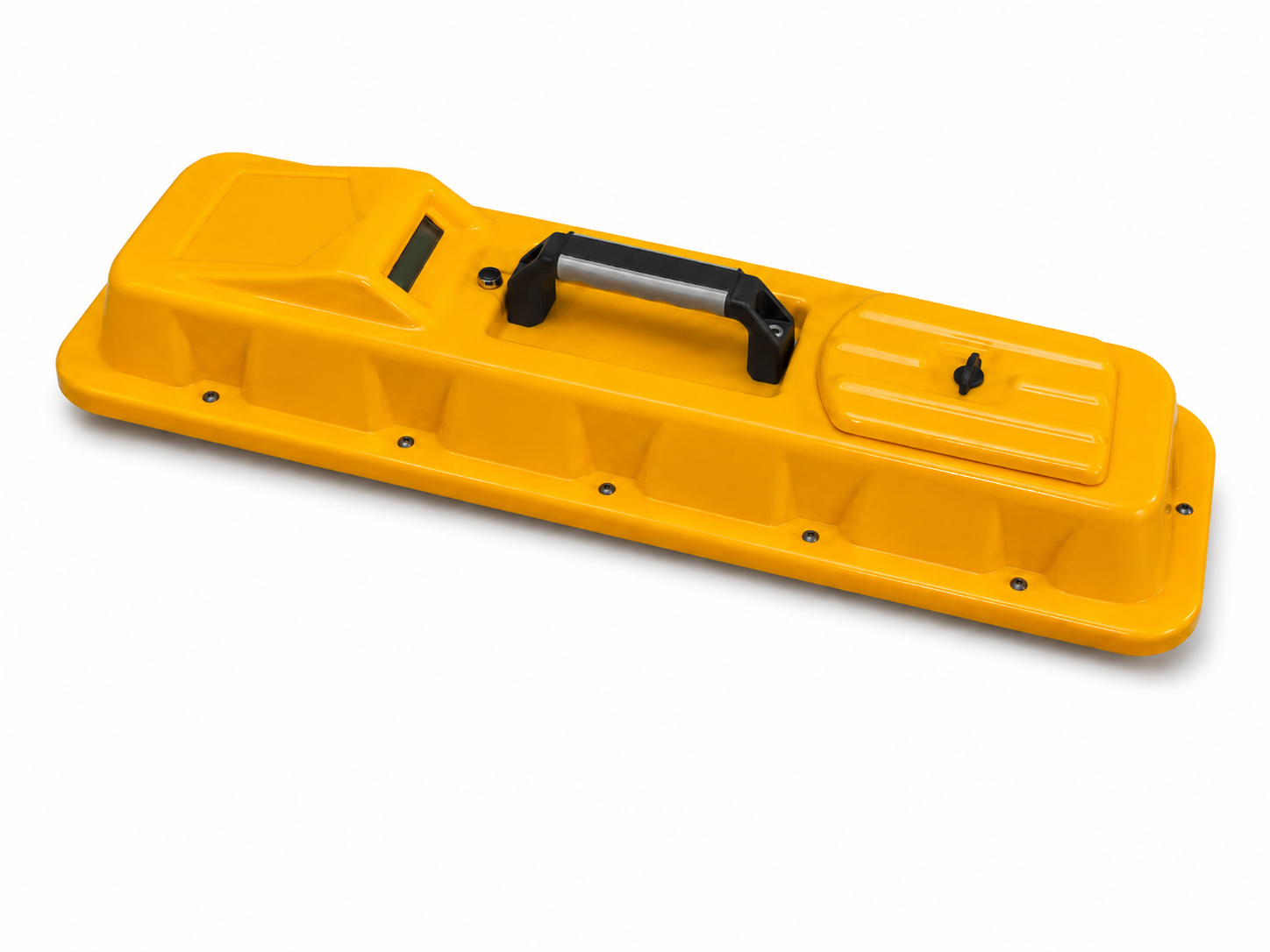
Place, press and receive the result.
Rapid acquisition of each spot reading.
Store readings with location coordinates.
From one set of eight AA batteries.
Why e-Spott HF
More information before committing to cores
Coring provides direct physical confirmation, but it is intrusive, time-consuming and usually limited to a relatively small number of locations. e-Spott HF supports rapid preliminary spot measurement so coring resources can be targeted more effectively.
Assess more locations
Collect spot measurements across a wider survey area before selecting the locations that require physical verification.
Support coring decisions
Use the resulting depth pattern to identify representative, unusual or higher-priority locations for further investigation.
Reduce surface disruption
Non-destructive spot testing can reduce the number of exploratory cores required during preliminary assessment.
Retain a location record
Each accepted measurement can be stored with its built-in GPS coordinates on the removable SD card.
Single-button Operation
From placement to stored result in four steps
e-Spott HF automatically transmits, receives and processes the radar signals required to identify relevant asphalt-layer interfaces.
Position the instrument
Place e-Spott HF on the asphalt surface at the required spot-test location.
Press the button
The one-button control starts signal transmission and automatic acquisition.
Identify interfaces
The system processes the reflected signals to locate the first and most significant layer interfaces.
Display and store
Depth readings are displayed for the operator and recorded to the SD card with built-in GPS coordinates.
Measurement Outputs
Depth information for immediate and later use
The system presents the identified interface depths to the operator while retaining the accepted result for later comparison and mapping.
First significant interface
The first clear dielectric change beneath the surface can be reported as the first significant layer interface.
Most significant interface
The strongest relevant response can be reported independently. Depending on the construction, both displayed values may be the same or may identify different interfaces.
Removable SD-card storage
Accepted spot readings can be retained for transfer, review, comparison and project record-keeping.
Built-in GPS coordinates
Location coordinates are stored with the readings so trends can be reviewed using GIS or compatible third-party mapping systems.
Field Productivity
Compact equipment for repeated spot measurement
e-Spott HF is designed for repeated testing along footways and smaller asphalt surfaces without requiring a full cart-based radar system.
Discuss Your SurveyTypical Uses
Asphalt assessment where rapid spot information is required
e-Spott HF is designed specifically for asphalt surfaces where total bound layer depth is the principal measurement requirement.
Asphalt footways
Rapid non-destructive spot testing across pedestrian asphalt surfaces.
Minor carriageways
Preliminary bound-layer assessment on smaller asphalt roads and similar surfaces.
Coring programmes
Support the selection of physical core locations and make better use of limited coring budgets.
Maintenance planning
Compare spot results across an area to identify variation in asphalt construction.
Quality verification
Obtain rapid layer-depth information for follow-up investigation or construction review.
GIS trend review
Export stored readings and coordinates for location-based comparison and visualisation.
Technical Overview
Reference specifications
These values are taken from the current product sheet. Confirm the final specification and project suitability with UTSI.
Confirm Suitabilitye-Spott HF technical information
Download the current reference sheet covering the operating principle, dimensions, measurement range, accuracy, GPS, display and battery information.
Measurement Considerations
A clear material interface is required for a valid reading
e-Spott HF identifies layer interfaces through differences in dielectric properties. The nature of the materials and the method of construction can affect whether a discernible interface is present.
Where the system cannot identify a suitable interface, it does not provide a depth value and displays a non-reading indication. Physical coring or another verification method may still be required where project decisions depend on direct confirmation.
Plan Your Asphalt Assessment
Use rapid spot testing to target further investigation
Tell us about the surface type, expected asphalt depth, number of locations, reporting requirements and planned coring programme.